
Our History
Learn a little about the grassroots, open-source e-NABLE community and how it began.
The e-NABLE Community is an amazing group of individuals from all over the world who are using their 3D printers to create free 3D printed hands and arms for those in need of an upper limb assistive device.
They are people who have put aside their political, religious, cultural and personal differences to come together and collaborate on ways to help improve the open-source 3D printable designs for hands and arms for those who were born missing fingers or who have lost them due to war, disease or natural disaster.
The e-NABLE Community is made up of teachers, students, engineers, scientists, medical professionals, tinkerers, designers, parents, children, scout troops, artists, philanthropists, dreamers, coders, makers and everyday people who just want to make a difference and help to “Give The World A Helping Hand.”
How it began
April 2011
It all began with cosplay nerds!
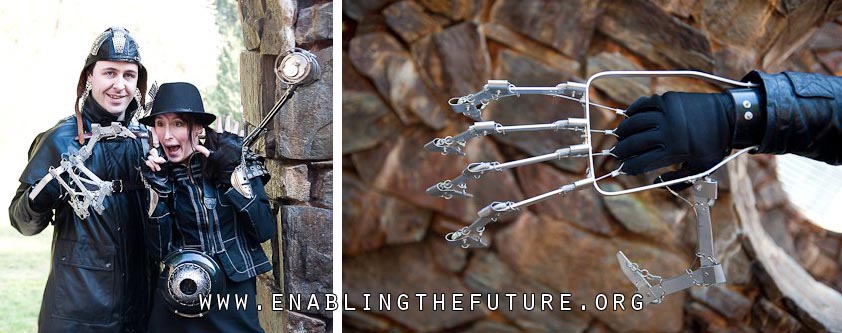
In April of 2011, artist and designer Ivan Owen created a crazy metal functional puppet hand to wear to his first-ever steampunk convention with his fellow artist and friend, Jen Owen.
Ivan's giant metal hand was a huge hit at the event and when they returned home from their adventure, he decided to post a short video of it on YouTube (opens in new tab).
December 2011
The email
The video that Ivan shared was somewhat forgotten about until one evening, he opened his email to see a message from Richard, a carpenter in South Africa who had lost his fingers in a woodworking accident. Richard asked Ivan if he would be interested in helping him to create a functional finger replacement after he had searched online and discovered that a single prosthetic finger would cost him around $10,000 US dollars.
He had been trying to design his own, but came upon the video that Ivan had uploaded and reached out for help.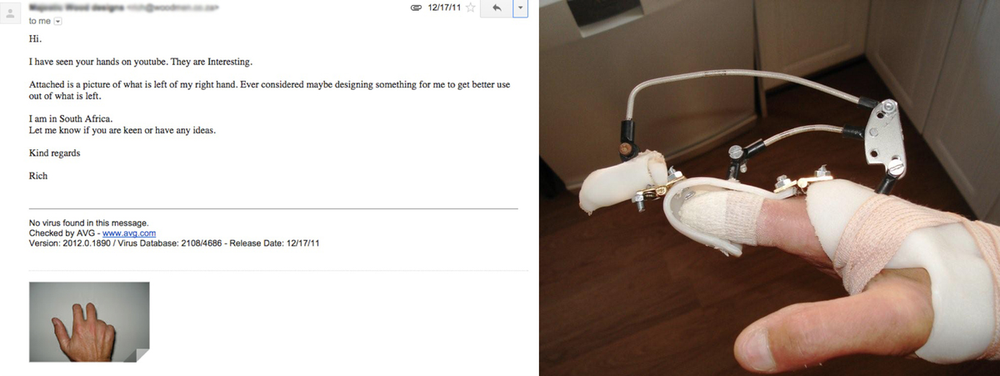
January – October 2012
Collaboration across 10,000 miles
Because Ivan and Richard were 10,000 miles apart, they had to work together through Skype and email.
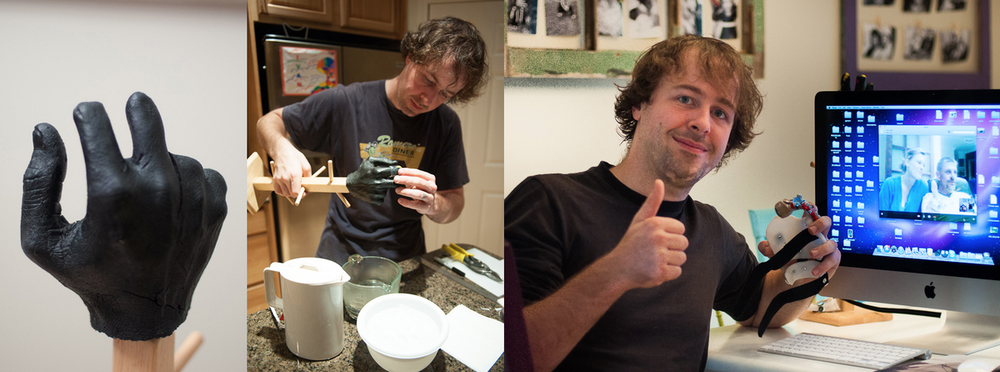
In early January of 2012, Richard sent a plastic mold of his hand to Ivan so that Ivan could design a device specifically for him.
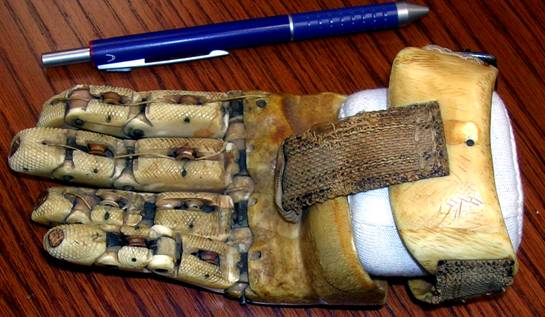
Ivan started researching prosthetic devices and stumbled upon the story of Corporal Coles' hand (opens in new tab). It was created in the early 1800s by an Australian dentist named Dr. Robert Norman who constructed it from whalebone, cables, and pulleys. This one hand, created over 100 years prior, inspired the design of what is now the building block for every e-NABLE Community 3D printed hand.
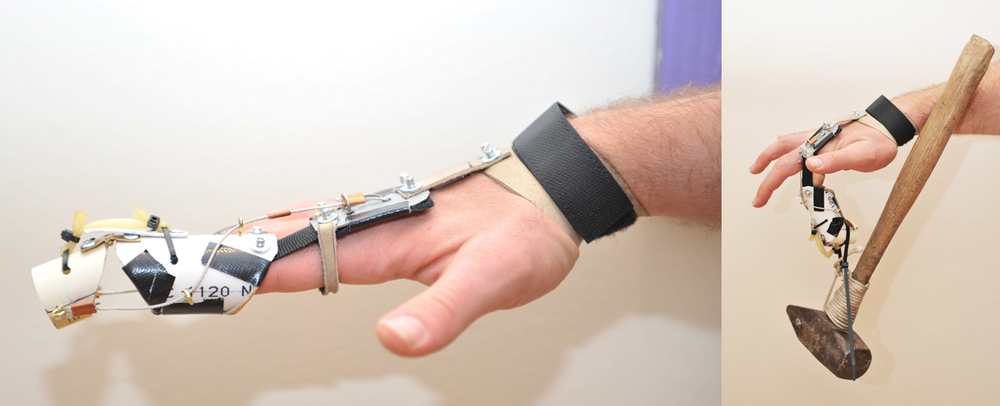
During the design process, they had to use objects they could both find around their homes and respective countries. Sometimes this involved items such as toilet paper tubes, leather scraps, zip ties, fishing line, rubber bands, surgical tubing, duct tape and various other items they could find.
March 2012
The first blog is created
As Ivan and Richard started making progress on the design for a single finger, Jen had started photographing the stages of development and sharing with her family and friends on social media channels. She decided it would be easier and more fun to create a blog, so that those who were interested in following their story could visit and read about their adventures.
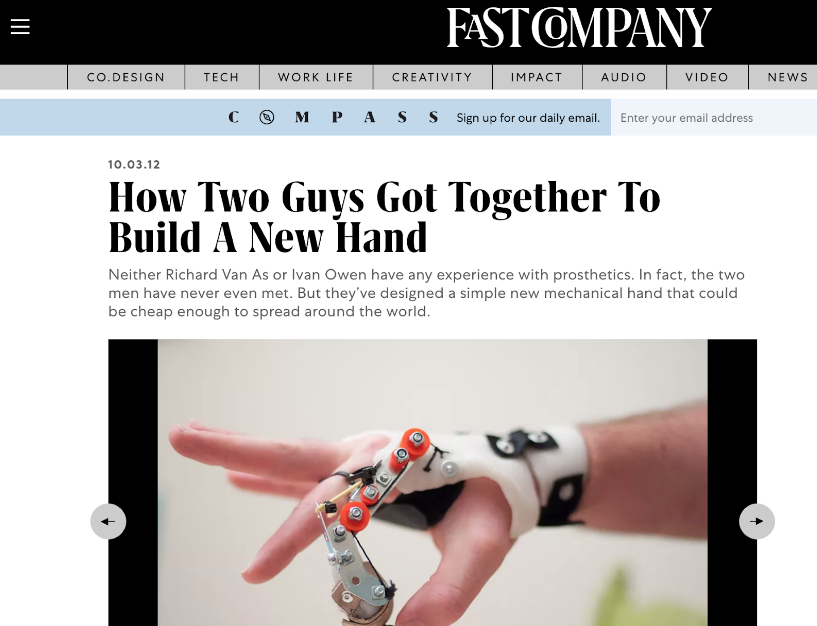
The media started picking up their stories.
November 2012
Time to meet in person
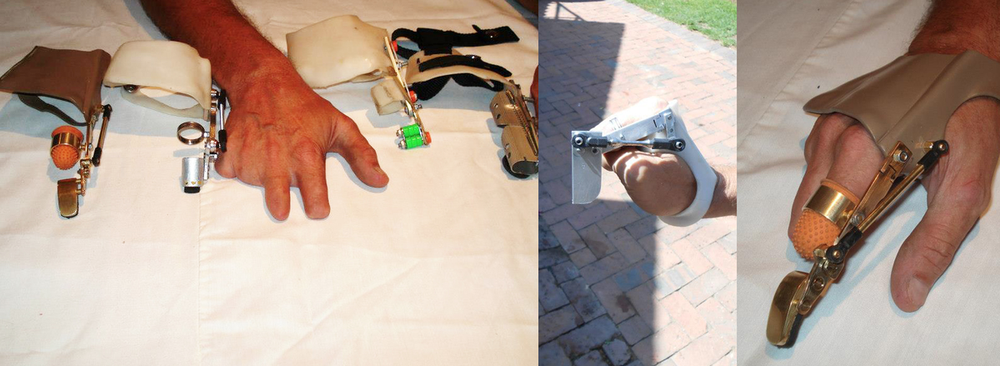
In early September, Ivan and Richard realized they had gone just about as far as they could go through online communication. They started a crowdfunding campaign to help get Ivan to South Africa so that he and Richard could work in person.
While they were raising money for airfare, a generous donor provided frequent flier miles so that Ivan could get to South Africa.
November 2012
Along came Liam
As more news articles and social media clips started circulating about Ivan and Richard's work on a single finger design, people started reaching out to them personally to ask for help.
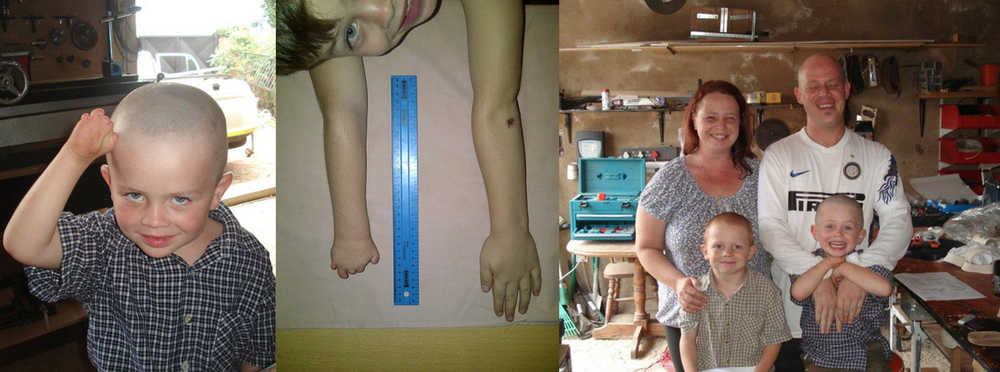
One of those people was Yolandi, the mother of a 5-year-old boy named Liam. Their family also lived in South Africa and she had read that Ivan was planning to fly down there to help Richard and had hoped he would be able to help her son too.
Liam was born missing his fingers on his right hand due to Amniotic Band Syndrome. He had never had fingers on his right hand before, so he had learned to do everything without them.
She had read the blog and had seen stories on Facebook. She messaged to ask if Ivan and Richard would be interested in creating a whole hand for her son, instead of just the single finger.
November 2012
The first prototype for an e-NABLE hand came to life
Yolandi had reached out just in time.
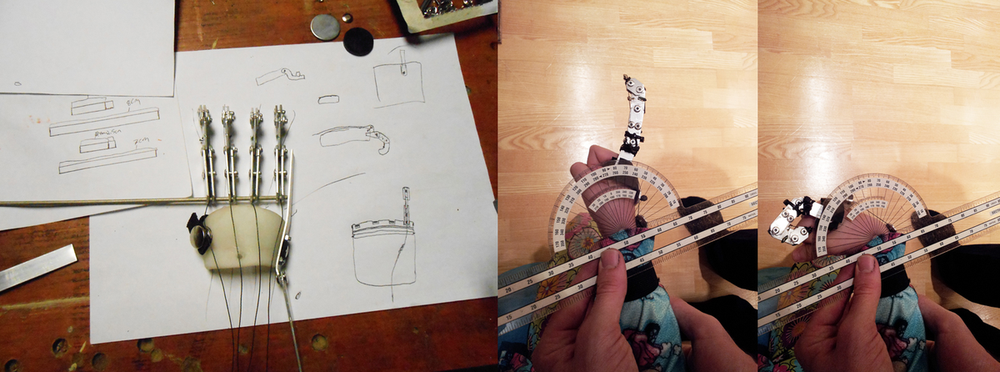
With just 3 days before he was set to leave on his journey, Ivan was able to take the design for that giant mechanical hand he had created for that first steampunk convention, and shrink it down to a tiny 4 fingered version that he would be able to take with him to South Africa.
November 2012
The world was waiting
After Ivan boarded his flight to head off on his long journey to meet Richard in South Africa, Jen asked people to send her videos and photos of themselves with words of encouragement for them.
Friends, family and even strangers showered them with images of inspirational quotes written on their hands, holding up posters and sending love to them from afar.
Thanksgiving 2012
Liam's new hand
With a limited number of days available to work in person once he landed in South Africa 28 hours after leaving the USA, Ivan and Richard jumped right into finalizing the single finger prototype for Richard.
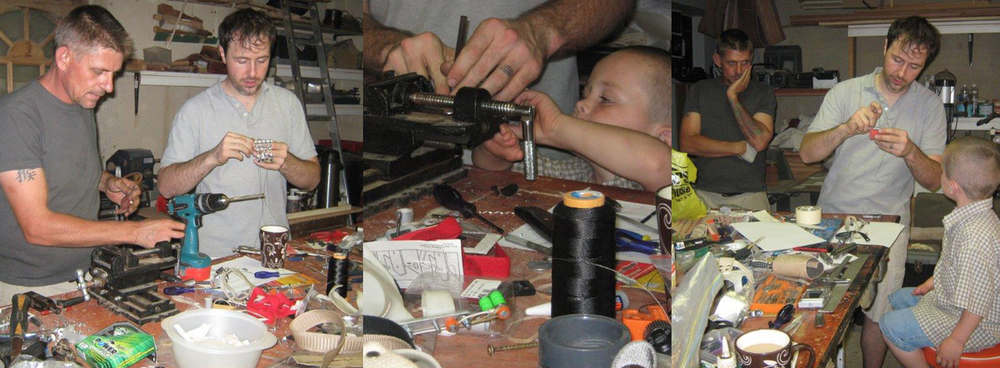
They then invited Liam's family over for a full day of building what would ultimately become the original e-NABLE hand.
Liam was able to help build his very own hand.
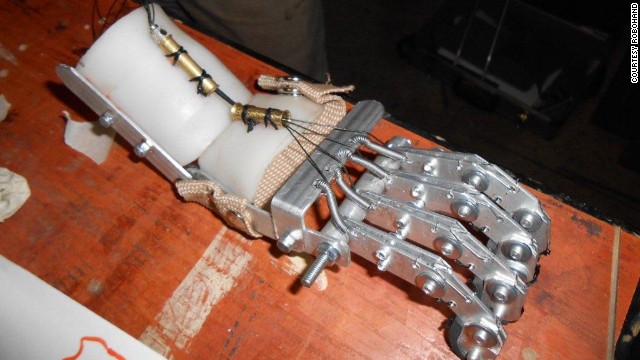
It was made from aluminum bar stock, rivets, screws, copper tubing, fishing line and some thermoplastic. While it was bulky, awkward and still missing a thumb, Liam was able to strap it to his arm and pick up a ball and other objects for the first time in his life.
December 2012
Liam's progress
Little Liam practiced daily with his new hand with the help of his mom and brother.
She created exercises for him to do at home and sent videos to Ivan to share.
Liam was determined to make his new hand work and learn how to use it, instead of getting frustrated and giving up. Because of this, Ivan and Richard were able to see how he was using the hand to get ideas for improvements for the next design.December 2012
The first 3D printed prosthetic hand for a child
While creating that first hand prototype for Liam, Ivan and Richard realized that because of his age, Liam would quickly outgrow the device and it would be exhausting trying to keep remaking it out of the same materials.
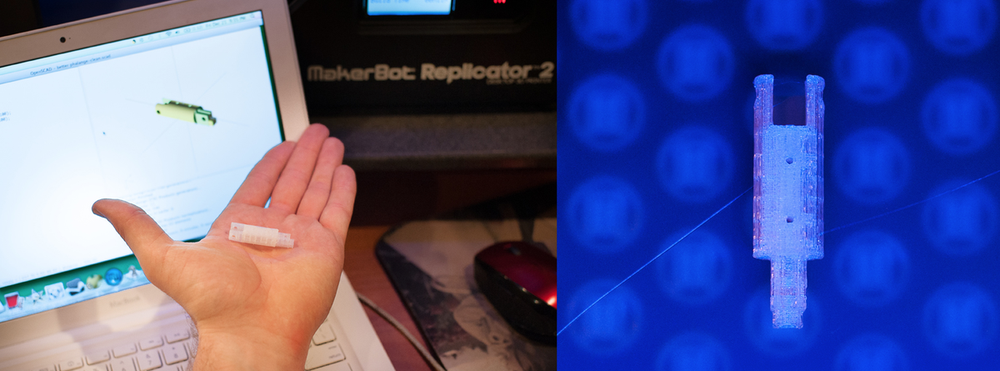
Ivan started researching the use of 3D printing to create the next version. He taught himself how to use 3D printer design software and contacted MakerBot, a 3D printer company, to ask if they would be interested in donating a 3D printer so that he could make new hands for Liam as he grew.
MakerBot was excited to see what they were doing and donated two 3D printers so that Ivan could design and send the files to Richard via email, who would then in turn print them out on his machine and assemble them into a hand for Liam to test out.
They called the first device a “Robohand.”
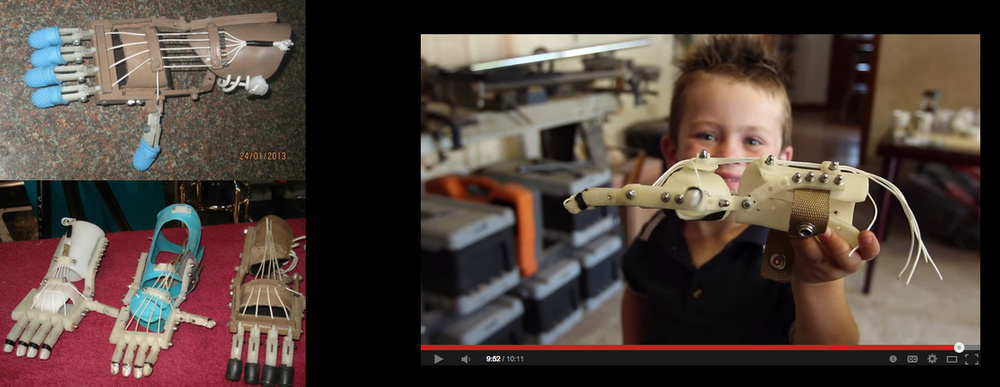
Liam would then give them feedback on what was working and what didn't feel good in each new design until they came up with the final prototype for him.
January 2013
The first 3D printed open-source design is shared with the world
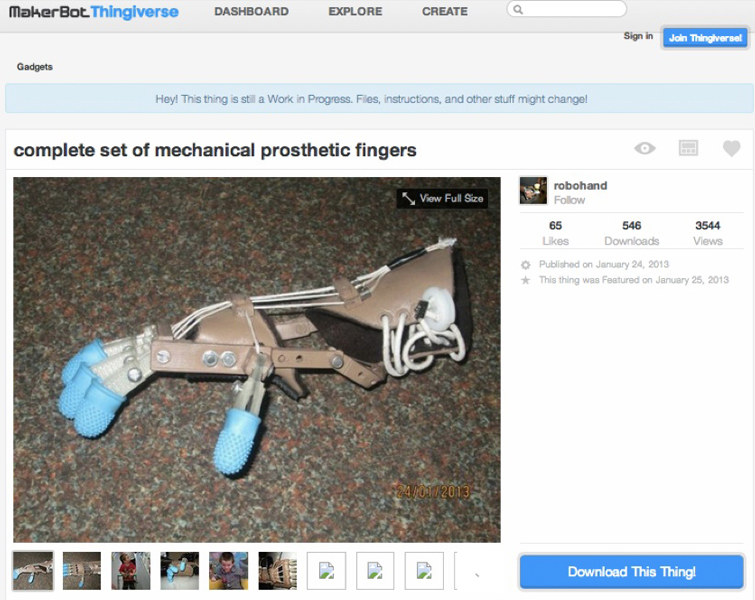
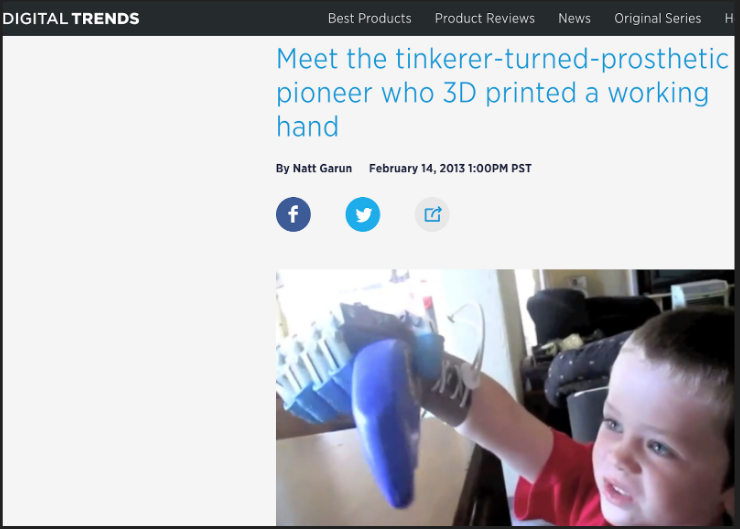
After watching Liam with his new 3D printed hand they all realized that if this design could help one child, it could potentially help thousands.
They made the collective decision to forego any potential to make profits from this design and instead published it to the internet as an open-source, public domain file so that anyone, anywhere in the world with access to a 3D printer could make one for themselves or someone else in need.
The best chance for the design to help the most people was to share it and hope those other designers would find it, improve it and reshare it back into the world.
July 2013
The e-NABLE Google+ community is born
In exchange for donating two 3D printers, MakerBot asked that they get to create a video to share about the first 3D printed hand prosthesis for Liam.
Once the video was shared, fellow makers and 3D printing enthusiasts started leaving comments on the video to state that they would be interested in helping to make 3D printed hands for other people who may need them too.
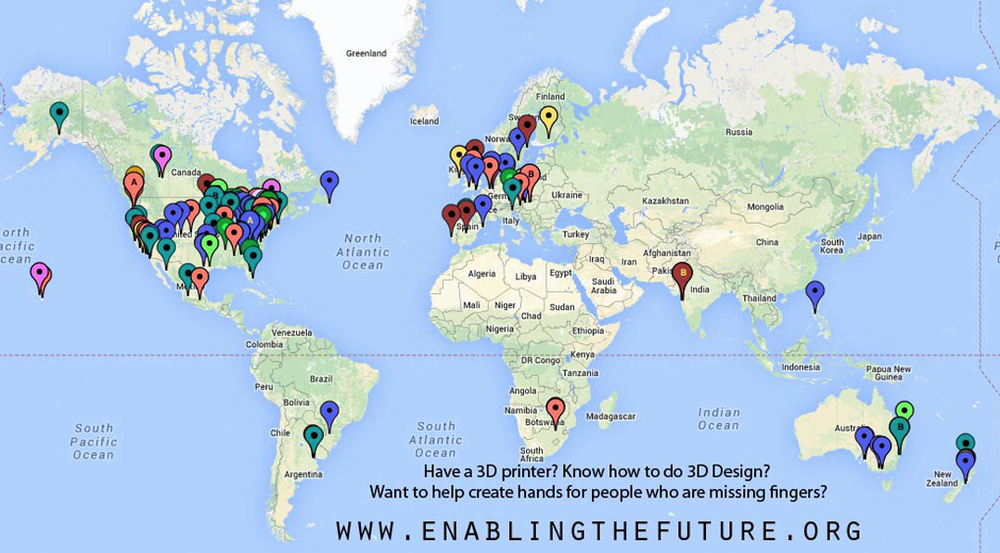
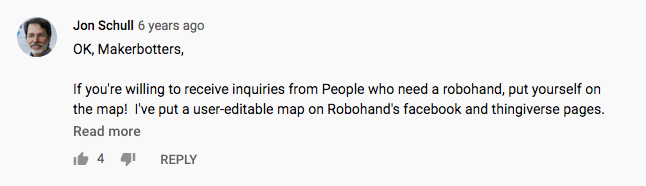
Jon Schull, then a professor at RIT, noticed that people were interested in helping and decided to start a Google+ community where they could gather and communicate. He set up a Google Map where those who had 3D printers and wanted to help could put a pin to show their location and let those who needed a 3D printed hand know how to find them.
He left a comment on the video and invited people to join.
By the end of July, the first 70 e-NABLE volunteers had joined the Google+ community and were actively working on cleaning up the designs and trying to locate recipients.
January 2014
The enablingthefuture.org website is created
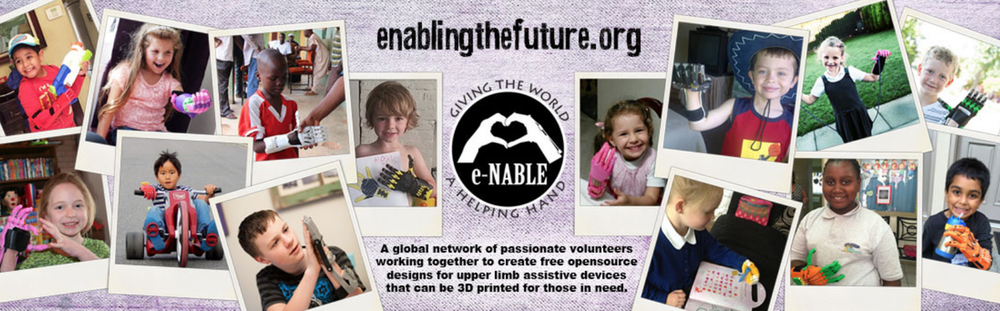
Jen suggested that this new community allow her to start sharing their stories and create a blog. With their permission and the permission of the recipient families, she created enablingthefuture.org, the home of the e-NABLE Community's history and stories of inspiration and hope.
The media started picking up the stories and families with limb different children started finding the e-NABLE Community and asking for help.
January – September 2014
e-NABLE superheroes
Families started finding the Google+ community and volunteers began creating devices for recipients and connecting with these families. Parents of limb different children were joining and becoming designers and makers of these hands themselves.
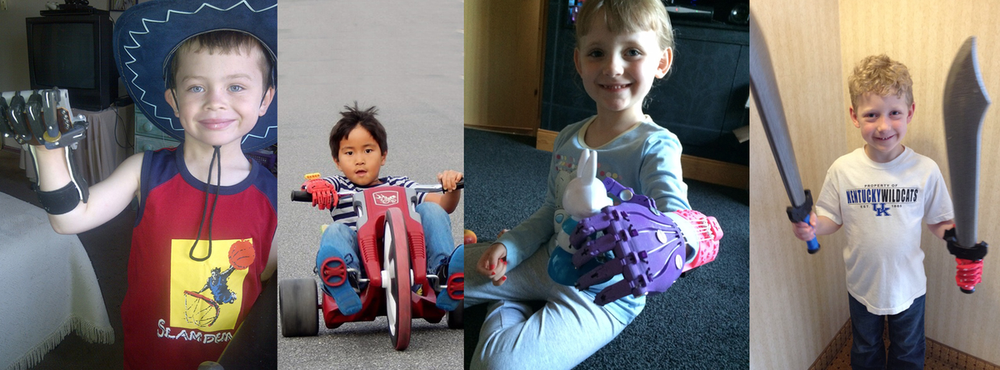
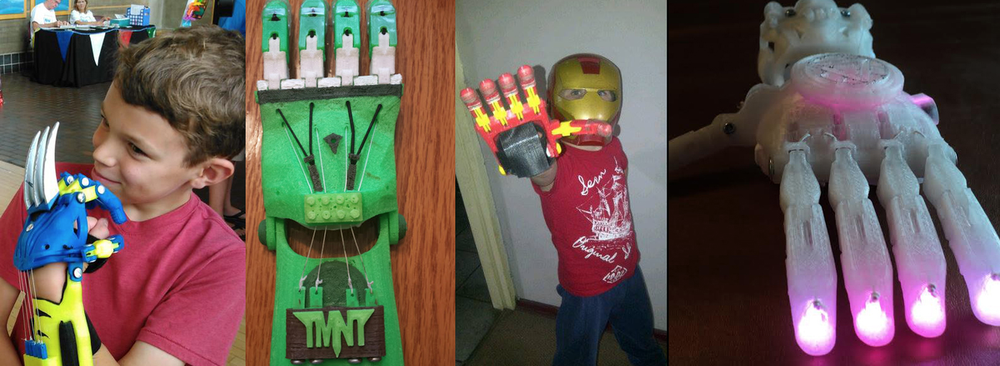
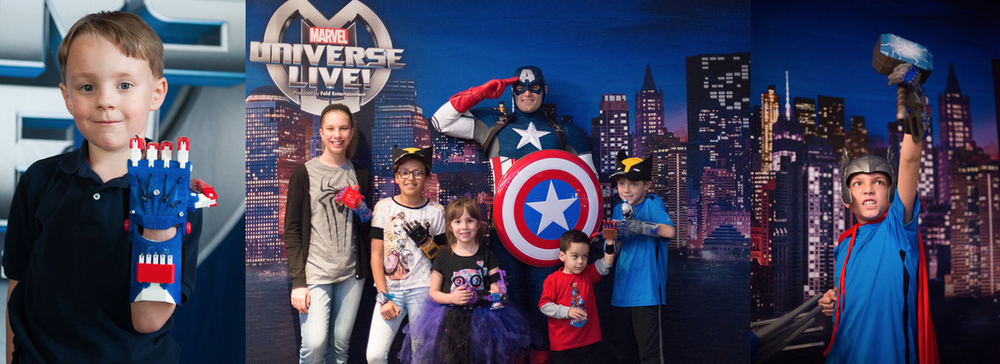
Designers started getting creative and the recipients were eager to get their own “superhero” hands.
Many of the children who have upper limb differences tend to be bullied or feel very self-conscious and tend to hide their hands and arms.
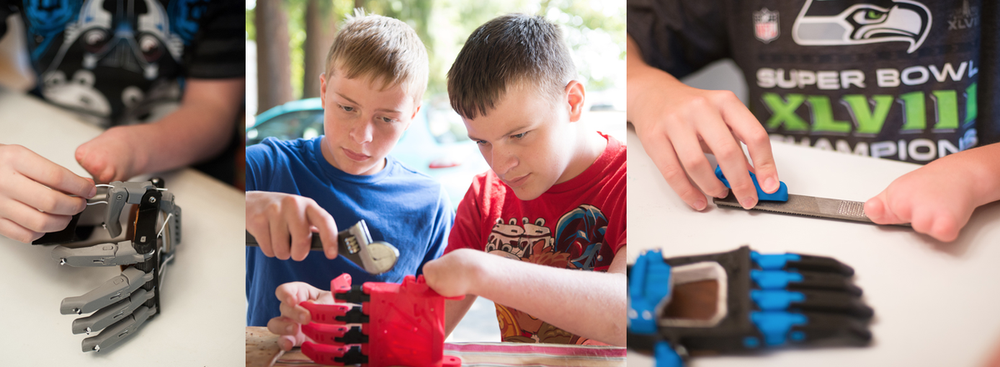
Now, with superhero themed hands, they were suddenly the envy of everyone in the class.Volunteers started teaching families and recipients how to assemble their own devices. Children were building their own 3D printed hands and learning how to teach others to do the same.
September 2014
e-NABLE's first conference
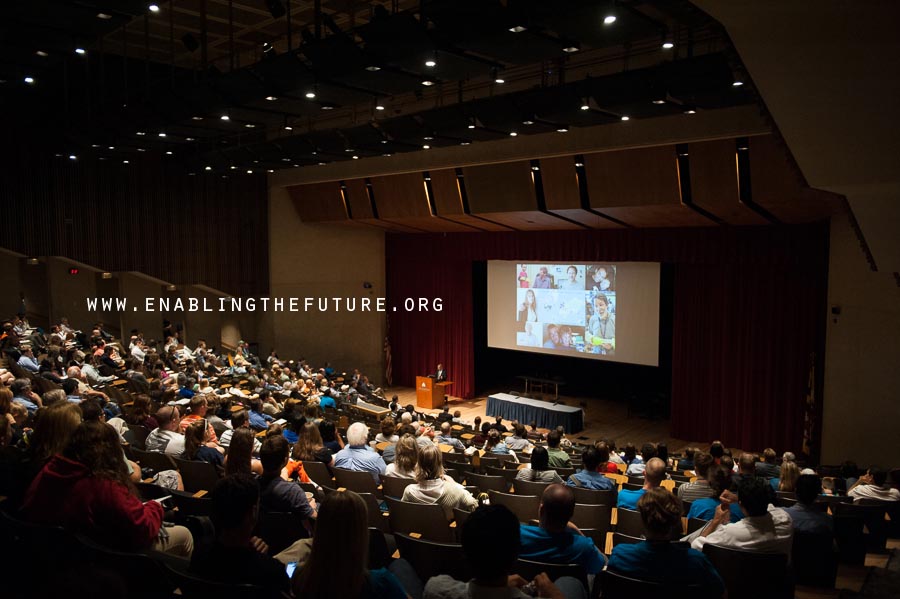
In September of 2014, Dr. Albert Chi, a leading trauma surgeon, learned about e-NABLE and invited the community to hold a conference at Johns Hopkins Medical Center.
They called it “Prosthetists Meets Printers.” (opens in new tab)
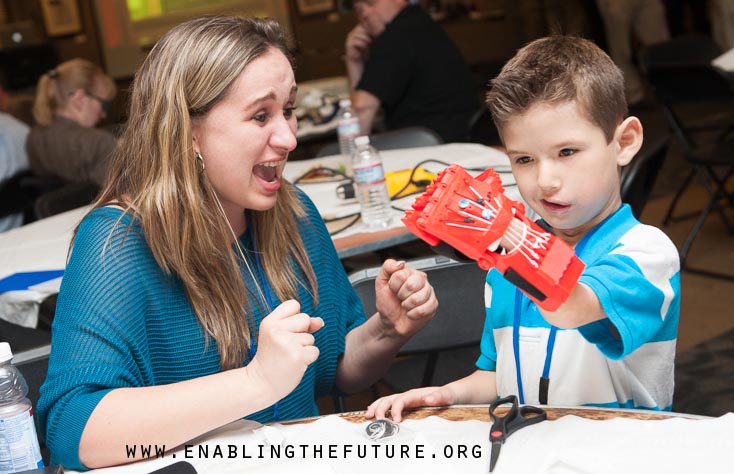
Over 400 people attended. The participants were made up of medical professionals, hand therapists, medical students, e-NABLE volunteers and 25 recipients and their families.
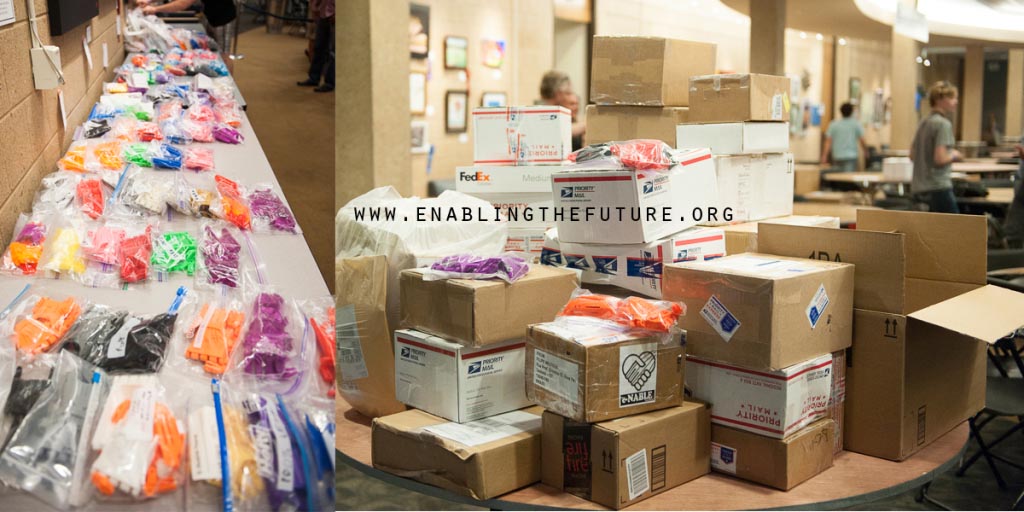
In just 72 hours, the global e-NABLE Community had been given a call to action to send as many 3D printed hand parts as possible to the conference so that volunteers could teach not only medical professionals how to assemble the devices, but also the families and recipients.
December 2014
The first Hand-a-thon is born
After attending the e-NABLE Conference and joining the e-NABLE Community, volunteer Maria Esquela put together an event with local scout troops in Baltimore. She created the first-ever e-NABLE “Hand-a-thon” where over 100 boy and girl scouts, their parents and mentors spent their entire Saturday working in teams to assemble 3D printed hands.
The hands were boxed up and sent to a clinic on the Syrian border where children and adults who had lost their hands due to war were waiting for them.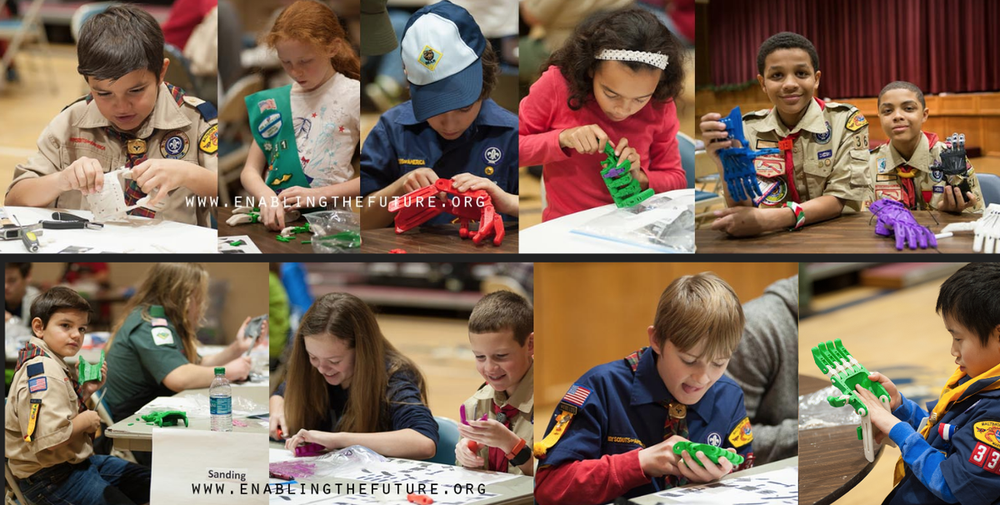
January 2014 – December 2015
Design boom
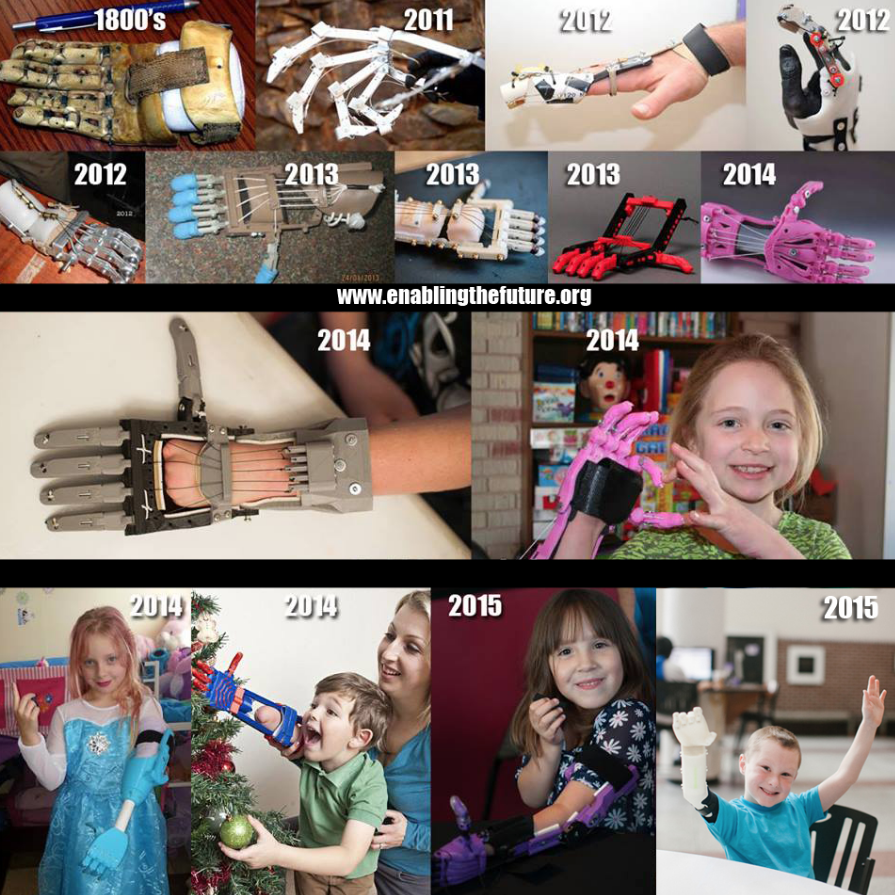
Throughout 2014, the e-NABLE Community exploded with new designs. Designers were joining by the thousands.
By the end of 2015, the first 3D printed, low cost, myo-electric version had been developed.
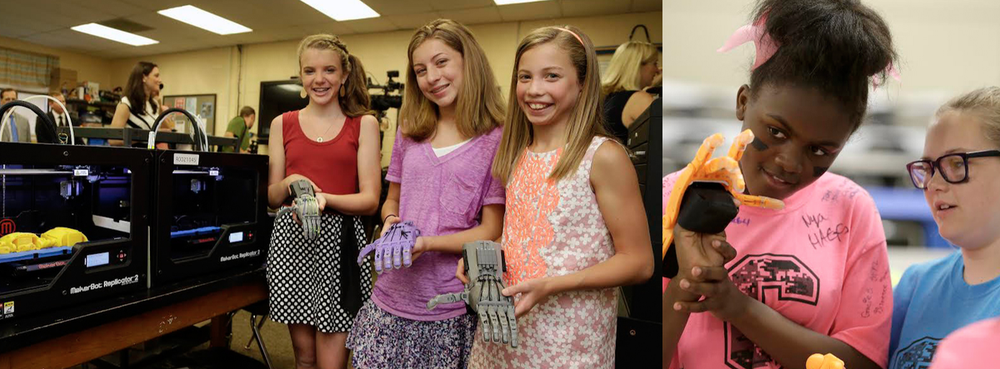
Teachers started using e-NABLE as an example of how 3D printing could be used as STEM-based learning projects in their classrooms. Thousands of students all over the world started participating in the project.
e-NABLE today
The e-NABLE Google+ community started with around 100 people who were simply offering to print the files that were already in existence. A handful of devices had been made for children in various parts of the world.
Within that first year, the e-NABLE community grew from 100 members to over 3,000. They created over 750 hands for people around the world and numerous new designs had been developed. The designers reshared those files into the public domain as open-source designs.
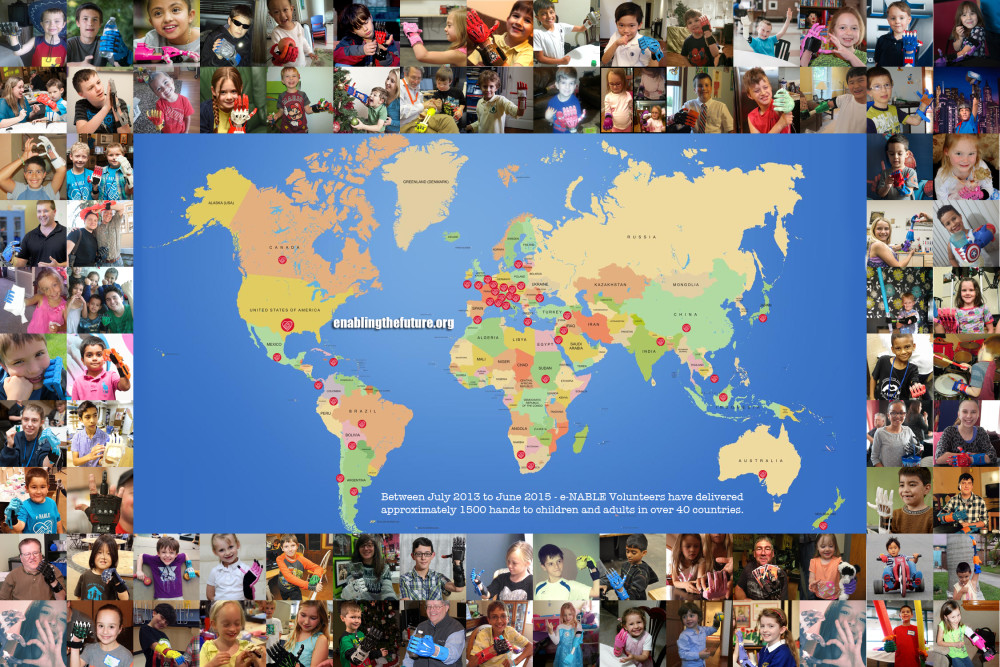
Within another year, they had more than doubled to nearly 7,000 members with approximately 2,000 devices created and gifted to individuals in over 45 countries.
All of these 3D printed hands and arms were free to the end user thanks to the incredible volunteers in our community.
By the end of 2018, the e-NABLE Community had over 10,000 members.
As of November 2019, nearly 7 years after the first device was created for Liam out of metal and scrap materials, there had been approximately 7,000 3D printed hands and arms created and gifted to children and adults in need in over 100 countries around the world. There were an estimated 30,000 e-NABLE volunteers (including students and teachers) helping to make a difference in their local communities, clinics and schools all across the globe.
There are over a dozen new designs and more being shared every day.
The e-NABLE Community has over 140 e-NABLE chapters and hundreds of schools participating in helping to make free 3D printed hands for those in need.
You never know where your ideas and imagination will take you! Will you join us?
Together, we can change the world.
“Now all the fingers of this tree (darling) have hands, and all the hands have people; and more each particular person is (my love) alive than every world can understand…”
Who's who
The people at the heart of the e-NABLE story.
Jen Owen
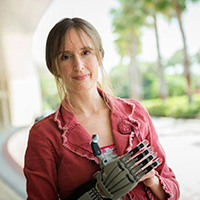
Jen Owen is a co-founder of the e-NABLE community and has helped to grow the e-NABLE movement since supporting the creation of the first 3D printed hand in 2012. She is also the owner, founder and primary writer of enablingthefuture.org (opens in new tab). She is a globally recognized speaker (opens in new tab) and has been a volunteer and participant in the field of open-source, 3D printed prosthetic hands for the past 8 years. Along the way, she has sought to highlight and document stories from the e-NABLE Community of volunteers and to maintain an information resource for people interested in learning more about the history, design and fabrication of these devices through this website.
Ivan Owen
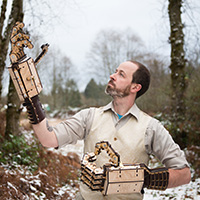
Ivan Owen is the original creator of the large metal puppet hand that led to him becoming the co-designer of the world's first 3D printed mechanical hand. Instead of patenting his design, Ivan released it to the world with an open source license, and in doing so, paved the way for the creation of the e-NABLE volunteer community. He continues to innovate and shares the e-NABLE story as a global speaker.
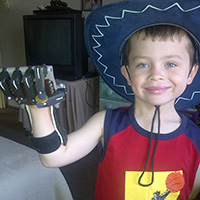
Liam
In December of 2012, Liam, a young boy from South Africa, was the first child in the world to receive a 3D printed mechanical hand. Because of his determination to “not give up” while using prototypes of the first designs, he helped to inspire the creation of the e-NABLE Community. Because of Liam's resilience, a global community of volunteers, creating thousands of free devices worldwide for other children like Liam, has grown into the incredible movement we now call e-NABLE.
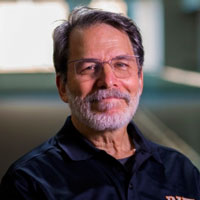
Jon Schull
Jon Schull is a co-founder of the e-NABLE community. In 2013, Jon saw a YouTube video featuring Ivan Owen's 3D printed mechanical hand and posted a comment inviting people interested in making these devices to put themselves on a shared Google map. This led to the creation of the e-NABLE Google+ volunteer community. He is an active volunteer, speaker and leader in the e-NABLE community, runs a 501(c)(3) non-profit e-NABLE chapter in Rochester, NY, and acts as financial administrator for the EnableFund (opens in new tab), which is the fund behind the e-NABLE Mini Grant Program (opens in new tab).

Jeremy Simon
Another co-founder of the e-NABLE community, Jeremy helps to support the enablingthefuture.org website, the e-NABLE Hub (opens in new tab), and the e-NABLE community in general. His company, 3D Universe (opens in new tab), is a strong supporter of e-NABLE and is responsible for developing the e-NABLE Web Central (opens in new tab) application, producing e-NABLE Assembly Materials Kits (opens in new tab), and managing the support help-desk (opens in new tab) for e-NABLE. He is a mentor to fellow volunteers as well as classrooms around the world who are interested in participating in the e-NABLE project. Jeremy also serves as chairperson of e-NABLE's Strategic Planning Committee (opens in new tab) and is a member of e-NABLE's Badging Team (opens in new tab).

Maria Esquela
Maria has been an active e-NABLE volunteer and leader since 2014. She created the first “assembly line” model for the e-NABLE “Hand-a-thon” team building events, brought the e-NABLE project to scout troops around the world and is the founder of APBLS, the Alliance for Project Based Learning Solutions, or what we like to call the e-NABLE Alliance (opens in new tab), a 501(c)(3) non-profit which focuses on using e-NABLE in STEM-based service learning projects and creating curriculum for research and testing on e-NABLE 3D printed devices.
Want to be part of it?
Request a device, or volunteer your 3D printer and make one.